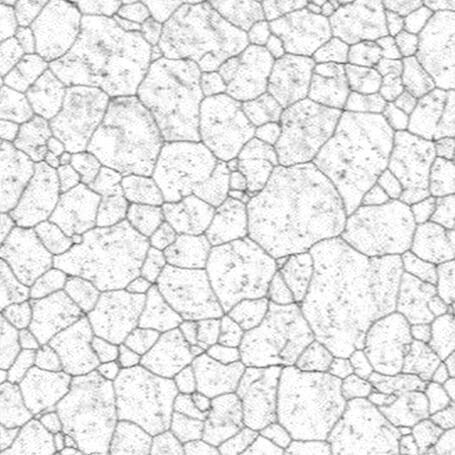
Grain size analysis
In many manufacturing processes, accurate grain size measurement from metallographic images is essential. However, conventional automated methods often lack robustness when faced with common sample imperfections such as twins, slip bands, over- or under-etching, and scratches.
At Clemex, our vision is a laboratory where grain size analysis is fast, simple, and reliable, with no guesswork and a single consistent method.
Our solution is fully automated, validated, and requires no parameter adjustment. It is truly plug-and-play, enabling users to obtain consistent grain size results quickly and confidently.
Universal Test method for grain size analysis
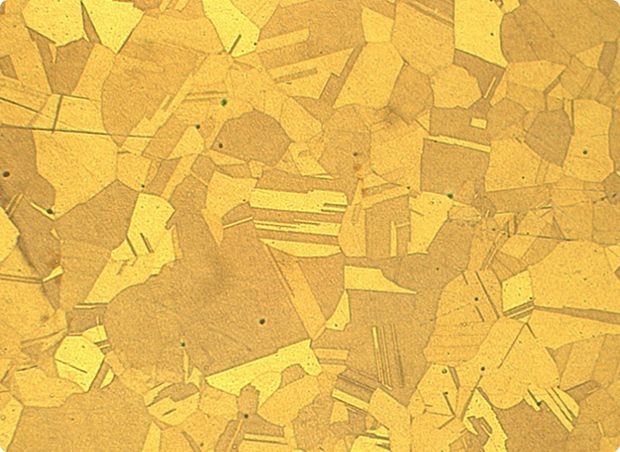
We make the impossible possible
It was previously impossible to automate grain size analysis on certain types of microstructures such as twining, compression slip lines or sample preparation artifacts. With the AI plugin challenges such as background noise, over or under etching and poor contrast are solved.

One method for different materials
You can now analyze copper alloys, austenitic steels or titanium alloys containing twins. As well dendritic grains like in aluminum are recognized. Last but not least: it supports all methods of the ASTM-E112 standard.
Key features
Universal method for grain size analysis
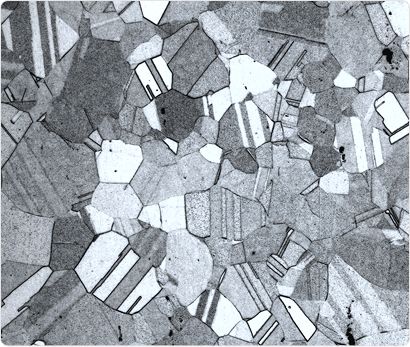
Counting twins in the past
With our new AI Plugin, segmenting even the most difficult images is fast and reliable. Twinned microstructures are not a problem.

> 160 times faster than manual methods
Compared to the common methods like the comparison or circular intercept method, the AI plugin is more accurate and reproducible. Throw your wall chart in the bin!
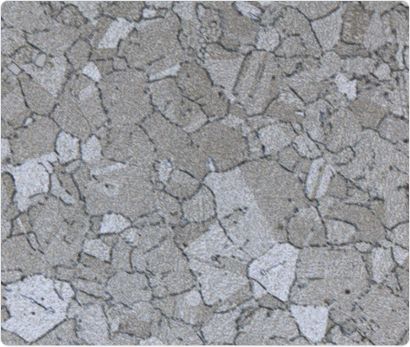
Segmentation of under etched samples
Cases in which the samples are under-etched can still be segmented: “dotted” boundaries are recognized and accurately segmented while ignoring twins and common deformations.
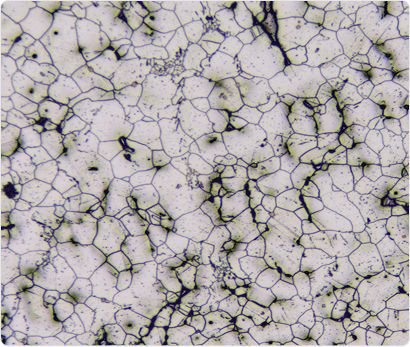
No time for proper preparation?
The universal method for grain size measurement ignores porosities and measures the boundaries correctly.

Scan and export just within seconds
Scan any sample with the same method and export results in just a few seconds.

Reliable results
The algorithm for the segmentation is validated by no less than the experts of the National Research Council Canada for metallography.
Grain and Cell Size
This image analysis Application Package allows you to measure grain intercept, intercept counts, intersection counts, grain boundary length, and grain areas in accordance with ASTM E112, ASTM E930, and ASTM E1382 methods, with validation using the Heyn method.

No visible grain boundaries
Martensitic steel where the structure appears after a heat treatment. This it can also be found in exotic non ferrous metals like NiTinol, a Shape Memory titanium/nickel alloy.

Solid grains with various colors
Solid grains with various colors (hue) like cast aluminum after anodization and viewed with polarized light and a lambda plate. Other materials with color etching.

Medium-Carbon Ferrite / Pearlite
In medium-carbon steel the pearlite intensity variation makes it difficult separate the pearlite from the ferrite. A special Clemex algorithm allows to distinguish these phases in a single step.

Austenitic Steel
Grain boundaries with etching stains can easily be detected. A special Clemex algorithm was developed to exclude the detected stains from the grain size measurements.

Solid grains with various grey levels
Examples are aluminum alloy or pure titanium viewed in polarized light without a lambda plate.

Light grains with dark outlines
Similar to austenitic, ferritic or prior-austenitic grain structures.

Incomplete grains with dark outlines
Grains found in materials like steel quenched and tempered.

Elongated grains with dark outlines
Elongated grains from cold rolled steel.
Go back to Application Catalog